Tuesday, April 10, 2012

Cartoons for Play!

Children need play!

So many teachers concern themselves with ordering children to keep their toys in their cubbies, and to only talk about "school" things. Children are forced to ignore their instincts and interests to participate in class activities. Teachers are left with writing samples that have no meaning to the children.

Instead, some teachers are inviting the toys, TV discussions, and movie characters into their classrooms. These teachers are experiencing children who are passionate about their writing and literacy experiences. The characters provided in movies and TV shows are only so developed, and the children are given the opportunity to further develop the characters. This can be done through writing, acting, interacting, and negotiating with partners. 

Allowing children to play in the classroom gives the chance for further exploration and development. These children will be exposed to meaningful activities to enhance their creativity and enrichment in literacy experiences. So many times, a child needs something to care about to produce a quality writing experience. Children care about toys, and integrating their passions into the classroom only heightens their learning experiences in literacy. 

Tuesday, March 27, 2012

Interactice Read-Aloud: Conversational Reading

Partner read alouds have potential to be so much more than round robin, back and forth reading. I have mostly witnessed partner reading where children sit side-by-side, and take turns reading alternate pages of the same story. This still holds value and worth in a child's literacy development, but when we think about the objectives of literacy stations and partner reading time, there is room for more!

Turn partner read aloud in a time for reading conversation!

This means the children sit facing each other: knee to knee. They continue reading in a pattern of their choice, but will engage in conversation before, during, and after the text. Children who have trouble finding the right moment to chime into the reading for conversation can predetermine a stopping point, where both readers will discuss personal connections, thoughts, text-to-text connections, predictions, reflections, or anything the text has triggered. When children are responding to the text in a meaningful way, like having a comfortable conversation with a peer, their comprehension is being engaged, and children are truly reading for meaning, to respond, and to share.

We want children to move from naming the words on a page to connecting with a text in a way that leaves an impact, a memory, and a response in a child. By fourth grade, children are required to read for knowledge, and comprehension becomes the most utmost important skill. Struggling readers many times have challenges in comprehending their texts, and a conversation can spark the reason, and provide the way for children to make meaningful and lasting connections with their texts.

Introducing partner reading as a time for conversation, reflection, and connection with a text and a partner allows children more opportunities to practice solidifying comprehension in an authentic and purposeful  manner.

Tuesday, March 20, 2012

Literacy Centers

Children's exposure to literacy in the classroom empowers them for rich literacy capacity and appreciation in life. The way a teacher handles her literacy experiences will stick with a child for the rest of their schooling, and life!

Literacy Centers are a perfect way to introduce children to a wide range of activities in a positive, relevant, individualized, and powerful way. The teacher sets these areas up, and from the beginning of the school year, teaches children about how to handle and move through the centers. This time allows the teacher the opportunity to spend time in small groups for focused instruction, and time with individuals for assessment and instruction, too.

Examples of Literacy Centers Include:

- Reading with 4-5 children: children read a loud at the same time for "Choral Reading," and the teacher moves his way through interacting with each child.
- Making storybooks with detailed pictures: provide books with many pages if you want the children to write more!
- Audio Books on Tape: Have children follow along in the books with a partner
- Chalk Board Writing: Children write sentences, stories, names of children in the class, or words. The teacher can help to scaffold the spelling by making and breaking.
- Making and Breaking Center: Cards to flip of three-letter words- manipulate letters to make new words
- Class name Recognition Center: Create and envelope with the questions "Whose name is this?" and cards inside the envelope withe every child's name- the child slowly pulls out the card to expose one letter at a time

These are only some ideas of great and meaningful literacy centers to integrate into your classroom literacy time. They allow the teacher to be involved with every student because children are busy working on their activities simultaneously.

Tuesday, March 6, 2012

The Reveal: What We Value in Literacy

The way we teach and assess literacy in our classrooms provides a window into our own beliefs about literacy. Each teacher holds his own philosophies about what children should learn, and how they should learn it. This combined with the institutional state and nationial standards creates a great dilemma. How teachers react and respond to this dilemma reveals the true values held about early literacy experiences and development.

Consider a first grade classroom. A teacher designated a time for free writing, where children can collaborate in groups, or write individually. They are allowed to draw pictures, but only for a few minutes before starting their sentences. A student begins very intricately drawing his picture, using different types of utensils for specific portions of his work. Just as his picture begins to come to life, the teacher interrupts and redirects him towards sentences about his picture: "That's enough drawing. Now write me some sentences about that wonderful picture you drew!" The child knows his picture is incomplete, with many more layers of complexity to the story in the picture. This teacher knows that writing is not included in her state standards, which are strongly upheld by her administration. She fears embarrassment, judgement, and possibly even job loss. So, the kindergarten teacher tries to show her value of drawing pictures as a literacy development and process, but her compliance with requirements conflicts with her age-appropriate philosophy.

This teacher chooses to ignore her better understandings of children's literacy acquisition and development, and chooses to focus on the standards that hold her instruction and class environment back from its fullest potential. Instead of fully believing in her own methods and ideas about writing, like her initial idea that pictures have great value, she caves and forces her students into unenjoyable literacy practices. As teachers, we will always be faced with this dilemma: our philosophies will not match the standards we are required to meet. The way we react to this conflict will reveal our true values. Instead of succumbing to dry and inappropriate mandated literacy practices, believe in the experiences you provide your children. We know that literacy is a complex process, and it cannot be defined by a check-list of developmental markers. Children are unique, and their literacy development will be just that. Teachers can empower their children by standing strong by their beliefs and knowledge about literacy, and providing the most enriching experiences possible.

Monday, February 27, 2012

“I’m stuck on a word, can I skip it?"

Everyone has done it. You’re reading along well, and you come to an abrupt stop when encountering a word you are unfamiliar with. Children experience this often, and the strategies and insights we provide them to make it through these sentences while retaining the meaning are pivotal. How often is the word we are stumped on integral to comprehending the meaning of the reading? What if the word is a noun? Adjective?

Let’s use this example provided by Debra Goodman from The Reading Detective Club:

The Three Little Pigs

1 Once upon a ______ there were three little pigs.
2 One day the ______ pigs decided to go out into the
3 world to make their ______ .
4 Each little pig ______ a house.
5 The first little pig built a house of ______ .
6 The ______ little pig built a house of sticks.
7 The third little pig built a ______ of bricks.
9 One ______ a world saw the three little pigs.
10 “A little ______ will make a tasty meal for me,”
11 he ______ .

Read this passage, filling in the missing words with your best inference.

Some of the techniques that we can suggest for children to pay attention to include:
- Using our background knowledge of the story
- Using the cues in the text to infer the missing (or unknown) words
- Read the sentence without the missing word, go back and try it again
- If the sentence makes sense without the missing word, move forward in the text

You may notice as you naturally fill in the missing text that your background knowledge, context clues, and natural ability to form conventional language provide enough information to successfully complete the passage with the intended meaning.

Look back at line 2. Most readers will naturally fill in either “three” or “little.” Do either of these words change the meaning of the text? No. Both choices are rational and the story continues unchanged regardless of this word. Even if we omit the adjective completely: “The pigs decided to go out,” the story continues accurately. We can use this concept to teach our children techniques to understand adjectives and their role in a sentence. We want children to be able to read every word in a sentence, but when a tough word comes in the way of comprehension, we can empower our students to carry the meaning of the text through the barrier of the unknown word! Teach your children to omit unknown adjectives, and move on through the text. The meaning, fluency, comprehension, and confidence will be preserved. Debra Goodman suggests thinking of unknown words as “smudges” on the paper.

Now look at line 5. Here some responses may have differed. I initially read “straw,” and so did my colleague. Other people may have added another noun here. Examples include mud, candy, Jell-O, snow, etc. Unlike omitting and changing our adjectives, if we veer too far away from the intended noun (something like straw or hay), we lose the writer’s intended meaning, and our comprehension fades. Our brains are naturally search for language clues, and would suggest to us that the missing word has influence in our sentence. We cannot simply omit or replace unknown nouns in sentences, but we can tell our children to remember background knowledge, look for context clues, and read through the sentence without the word and try again with a “running start.”

Understanding what words are necessary for comprehension and meaning making can help our students to feel empowered when reading independently. Children want to be good readers, and we can empower them with the techniques to be exactly that!

Monday, February 20, 2012

Stop Correcting and Start Listening!

"In all walks of life, we know that humans learn from their mistakes. We have mistakenly believed that if teachers do not correct, errors will be reinforced and students will continue to make them forever." 
- Gretchen Owocki and Yetta Goodman

Children learn best through self-correction in all facets of their learning, including literacy development. One of the hardest, and most powerful, skills that a teacher has at her disposal is her power to listen to a child read out loud. Using the information gathered during the uncorrected or influenced reading, teachers can guide their instruction in small group or large group settings. Children reveal their understanding of reading concepts and strategies through their miscues. A miscue is anytime a child reasons through changing the written text on a page and changes the text by adding a word, changing a word, or omitting a word. Many times, a child is capable of self-correct during the struggle with a word, or later in the story as context builds. 

In order for a teacher to complete a Miscue Analysis with a child, he needs: 
- A new relevant, interesting, and rich children's literature book
- A recording device
- Note cards, or something to take notes with
- A pen
- A transcript of the text from the children's literature book chosen, divided/numbered by line
- (Possibly) A list of questions to ask the reader after the uninfluenced-reading

The teacher should introduce the child to the activity, and warn them that you will record them, take notes, and never interfere with their reading; you will not help them when they get stuck. Have the child begin to read, and make notes over the transcript when a child changes, omits, or makes a change to a miscue. After the child finishes, ask the child to tell you about the story. If she has challenges with this, make suggestions like, "Tell me more about _______ (fill in with something of the child's language that she mentioned)." This should allow you to realize if the child has truly comprehended the story. If your student can recall main points in the story, he is focused on the meaning of a story, which is wonderful. 

The marks/notes that you made on your copy of the text can now be used to address some of the child's miscues with the child. First, you need to assess if the child's miscues made grammatical sense (substituting nouns for nouns, adjectives for adjectives), and it made sense in the story's context. For example, if a child repeatedly substituted a word throughout the story, but the context did not match, the teacher can now use this to ask the child what that particular line meant. Usually, the student will express confusion, and we can use this to guide a child to focusing on the meaning of a passage. If the text does not make sense in your brain, the words are probably pronounced differently. A teacher can use this to help a student self-correct. 

During the intervention portion of this assessment, ask questions like:
- What else could you do in situations where you are unsure of a word?
- Do you know what you read in line _____? (When a child miscues, this might trigger a memory that he knew it was not quite making sense)
- What are the smart things you did in your reading to decide that word was _____? (After a self-correction)
- What could it say?
- What would make sense?
- What would you say there?

Using Miscue Analysis allows a teacher to understand how his students individually think about reading, the strategies they use, the concepts they use proficiently, and the areas that challenge them most. When a teacher performs a Miscue Assessment correctly, she has the opportunity to adapt her small group, individual, or large group instruction to meet the needs of her children. Through these experiences, children will learn strategies to self-correct, which is the most powerful instruction a child can learn. Through self-correction, a child will truly learn to read to gain insight into the meaning of the text, and worry less about the text representations on the page.

Tuesday, February 7, 2012

We Don't "Sound Out"

Children are not sounding out. They are using specific reading strategies to form words, jog memories, and correlate pictures and text, but children hardly ever use the technique of "sounding out." According to a study performed by Catherine Compton-Lilly, a professor at the University of Wisconsin- Madison, children and parents both cite sounding out as their main reading strategy. Children claim that when they come to a word they are unfamiliar with, they sound out the word until they get it. When children ask parents for help on a particular word, parents are urging their children to sound out the word. When Compton-Lilly watched her children struggle with words out loud, she noticed, over and over again, that children were not sounding out. They are using specific strategies, but the times that "sounding out" is used are few.
Some other strategies that children suggest that "good readers" use include:
- go back and try again
- he thinks in his brain
- they ask their friend can you help
- try the first letter or the last letter
- spell
- look at the pictures.
These strategies are children explaining complex and effective reading strategies. Picture cues, peer help, dividing words into parts, retrying, first and last letter help, and thinking about context clues are all wonderful strategies for reading unfamiliar words. Instead of using these phrases, teachers and parents continue forcing children to think of "good reading" as a process of  sounding out. We have been taught this way, and we usually do not know any other techniques to suggest to our children, so telling them to "sound it out" becomes the most practical and easy suggestion. Well, instead of producing readers, we are creating frustration. Children cannot look at a word and simply "sound it out." They need a method. A great way to end this cycle of forcing children to "sound out" words is to educate our parents on true reading techniques.
Some great techniques to research and educate parents about include:
- Looking at the pictures
- Dividing the word into parts
- Trying again
- Asking a peer for help
- Looking for familiar parts in other words
- Looking at the first and last letters for the whole word meaning
If teachers and parents can cite these suggestions, instead of demanding children to "sound it out!" we might have better success with all readers, regardless of ability, culture, or any other demographic.

Remember! We don't sound out!

Sunday, January 29, 2012

"A Window into a Child's Mind"

Children's writing provides a wonderful insight into the concepts of conventional writing that children are currently coming to understand, have already mastered, or are still working to fully grasp. Early elementary teachers understand how important inteoducing and encouraging appropriate writing attitudes and practices with our children.

According to a University of Arizona professor, Kare Foley Cusumano, there are seven concrete ideas that teachers should always remember and embody in their classrooms regarding writing experiences. These points include:
- Praising writing by the meaning that a child intends, and its content. This means never pointing out errors regarding conventional writing norms
- Understanding that inventive spelling/writing will develop into conventional writing
- Focusing on positives, not errors; avoid a focus on "correctness"
- Introducing conventional writing ideas by pointing them out in literature, environmental print, and personal letters
- Demonstrating writing by example: let children be involved in writing letters, emails, making grocery lists, writing checks, etc.
- Incorporating rich writing experiences into family activities like writing letters to family members, journaling, making cards, etc.
- Creating a World Wall or Spelling Dictionary for children, which they create and should not be used as an excuse to demand conventional spellings

When a teacher completely understands and carries out these ideas and philosophies of writing in her classroom, she has begun to develop the "best practice" and most appropriate environment for writing, but it is not yet complete! A child needs a supportive community in order to be the most successful in writing. A child also needs family and community support, which should be aligned with the 7 best practices identified by Cusumano. Teachers have a responsiblity to educate families and community members about the ways to approach writing literacy at home. Some great times to educate families include open house, parent-teacher conferences, and writing workshops. During these times, a teacher should look to convey the 7 integral philosophies of children's writing, and provide positive strategies for practicing appropriate writing at home.

Some simple ideas to encourage appropriate early writing at home include:

- Reading good children's literature, while pointing out conventional points like spacing, periods, syllables, beginning-middle-ends, left to write orientation, etc
- Encouraging writing with materials to write on and with
- Focus on the positives of writing, never what a child is missing
- If you cannot read inventive spelling, ask the child to read to you what he wrote
- Write letters, journal, lists, notes, anything!
- Demonstrate writing practices to start conversations
- Be creative, stay positive, model well, and be open!

Using these tips a teacher should be able to create a team of support for a child so he can develop appropriate and flourishing writing habits and attitudes.

Sunday, January 22, 2012

Digging for Early Literacy

Children learn and absorb literacy experiences constantly throughout their lives. This natural process is harshly and dramatically contradicted in traditional teaching methods in elementary schools. We expect children to conform to worksheets, word walls, memorization, speed reading tests, and spelling tests when these assessments and requirements oppose how children learn best: through experience. A great way to create this experience and encourage natural literacy acquisition in children is by creating a “Literacy Dig.” A Literacy Dig is a full, rich, and wonderful method to set up a classroom to boost literacy practices. To initiate the Literacy Dig, a teacher should search for some sort of outside community connection that could enrich the child as a whole. An example that a group of teachers and I are currently working on starts with a Goodwill store. We plan on starting the experience with a “field study,” where we will bring our students to Goodwill equipped with clipboards for notes, drawings, and recorded environmental print; cameras for videos and pictures; audio recorders; and plenty of writing utensils. At Goodwill, the children will try to document as much information as possible to bring back to the classroom. When back in the classroom, we will share our artifacts, notes, and pictures, speaking about these processes. To move the process further, we plan on encouraging the children to create their own “Goodwill” in our classroom/school. This will require planning for a wide range of relevant, real-life situations and the children will be using, developing, and acquiring literacy skills during the entire month(s) long process. Teachers can prearrange for members of the community to come into the classroom to share knowledge about the finance of running a Goodwill store, the environmental benefits of thrift shops, an owner of the store to talk about the business of hiring and managing employees, a banker to demonstrate how to ask for a loan to start the store, and many other community members. Then, with their new knowledge, the students can begin to form their store with very specific and accurate representations. A Literacy Dig like this has endless possibilities and can only be taken as far as the teacher is willing to run with it. A wonderful, involved, and spontaneous teacher can make a small idea like creating a Goodwill store a quarter-long event that covers all the curriculum and required standards. This is a great way to encourage, teach, and make meaning of literacy with children. 

Tuesday, January 17, 2012

Thoughts on Culture in Literacy


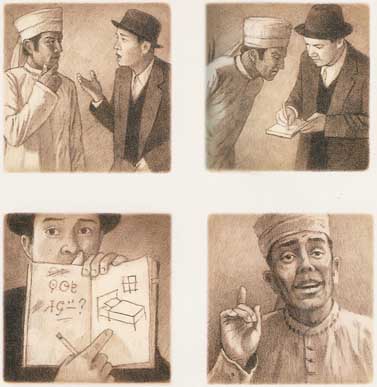
After recently watching a wonderful interpretation of Shaun Tan's Arrival, which can be watched by following the link, I gained a new perspective on teaching second language learners and educating children from various cultures and countries. Tan's novel, which is not completely shown in the YouTube video, follows a man as he throws himself to a completely foreign and new country. He experiences new customs, language, and interactions. These differences limit him from being able to have a job, except from a mindless factory job. Tan's thoughts pretty accurately reflect our view on immigrants in America. We seem to have this underlying idea that if English cannot be sufficiently spoken, a person's worth diminishes. When thinking about our students in our classrooms, do we hold these same biases? Should our English language learners be required to take assessments in English, or provided opportunities in their native language. It is a debate that is hot in education today. Tan continues his story, outlining the bitter struggles the man endures, but eventually he is able to earn enough money to send his family so that they join him in the new county.

The man's language abilities are not seen as worthy of holding a non-factory job, and the question of "what it means to be literate" can be pondered through this story. If we say that literacy is a means of communicating, then this man is literate in his own sign language and his native language, but not the countries main language. Is he literate? Are our second language learners literate if they cannot speak English, but achieve milestones in their first language? These types of questions need to be considered when thinking about teaching literacy in early education. Our own thoughts can be reflected in the manor in which we teach all types of learners. Thinking about establishing an inclusion setting, a community-based model in the classroom, and an anti-bias approach in my classroom, I can only come to the conclusion that requiring English language learners to solely communicate literacy in English is wrong. As teachers, we can think of creative and innovative ways to connect the first language to the classroom in a meaningful way.

Tuesday, November 15, 2011

Empowering Children to Think Critically and Tell Stories

One of the most powerful strengths a teacher can facilitate within her students is giving children a voice. In Negotiating Critical Literacies with Young Children, a teacher explains her experiences with a kindergarten classroom. She takes us through the process of setting children up for critical thinking, and exposure to intense literacy, and the opportunities to use their well-develop literacy skills. The chapter encourages teachers to answer children's questions with a challenge, instead of a blatant answer or another reframe of their own questions. These methods are usually, harmless, but they also do not grow children in their critical thinking and literacy skills. Instead, if we answer children's questions by pushing them to figure out the problem, challenge it, and create a change, we are setting the stage for a rich literacy experience and exponential growth. The example provided takes us through a kindergarten class's frustrations of being excluded from a school-wide cafe, which has been reserved for first-eighth grades. When a child asks the teacher why they are not allowed to go, she responded by asking "what can we do to change the situation?" This simple change in diction and attitude towards the capacity and willingness of children to make change happen creates an incomparable change in environment and exposure. The children are not required to work together, debate, reform ideas, and reshape opinions to come to a common end. The suggestions provided by Negotiating Critical Literacies with Young Children allow teachers to foster a meaningful, rich, and relevant environment, that does not limit able children to surface level topics, but digs deeper and enriches their literacy functions on the way.

Children's storytelling capacities can be imperative to their literacy development, and success as a reader. Teachers have the chance to create an environment that supports children as writers, provides the tools for storytelling, sets the stage for what a story includes and embodies, and celebrates children's final creations. In Castle in the Classroom, Georgia Heard explains how she facilitates writing in her own kindergarten classroom. Instead of simply reading children a story, providing them blank booklets and writing materials, and saying "go," Heard has an elaborate, carefully planned out list of activities and lessons that educate children about what stories can mean, what they can include, how they can be told, what they can say, and how they can say it.

This type of background includes lessons in:
- Stories Have Settings
- Stories Have Characters
- Stories Have a Sense of Time
- Stories Have Problems
- Stories Have Solutions to Problems
- Writing Descriptions of Settings
- Writing Character Descriptions and Dialogue
- Writing Golden Lines
- Exploring Story Planning
- Exploring Story Writing
- Writing Story Titles

Not until a teacher has successfully introduced and integrated these concepts together, does she expect children to be equipped to produce a full story. When a teacher brings children through the process of understanding storytelling through these interactive, fun-filled lesson plans, children get to the last three steps, and they are flourishing with ideas and plans for their own storybook. When the rough plans have been created, using many mediums for illustrations, teachers can formally publish the books for each child. This culmination project leaves students with a beautiful piece of their learning from many weeks of study, work, and determination. Castle in the Classroom provides teachers with explicit instruction to create storytelling mentalities within each of our students, and the manner in which to introduce concepts to empower children in storytelling.

Wednesday, November 9, 2011

NAEYCAC on Twitter

This past weekend, the National Association for the Education of Young Children held its annual conference in Orlando, Florida. As technology has taken over almost every facet of our lives, it has also breached the NAEYCAC. Although I did not attend, I was able to follow the progress and conference key points through tweets on Twitter. These are some of my favorite tweets, which included the easily followed hashtag #naeycac


Social and emotional confidence is more important than knowing the alphabet.  

- I love this, and thought it was a great and bold point to make. Children are under so many pressures in preschool, and learning the alphabet should second to protecting children. Empowering children with social and emotional confidence is the best education we can provide a child. Through this, children can become strong people, who are equipped to learn new things easily. Although the alphabet is important, it will come. Children who are damaged and self-conscious by kindergarten will most likely carry these traits with them through life.

Babies catalog sounds. The research says the key window to develop  is 8 -10 months of life! ~ Dr. JoAnn Deak 

- Early Childhood Education advocacy!! We often believe that talking to a baby before he can "understandably" respond is only for our benefit. Children are receptive, and take in the experience provided to them most in the formative, early years. Talking to, reading, playing with, interacting with, and writing with our babies are all great ways to start the early foundation of literacy.

Childhood has gotten too neat and tidy. Embrace the dirt and celebrate the mess!  

- I completely agree with this! Our preschools are required to be neat, clean, and spotless, but that doesn't mean that our activities have to be!! One model that I recently observed provided children with clothes to change into at school. This way, children can be messy and fully experience the sensory activities provided in a messy fashion. Teachers can wash these clothes, and throw them in the drier before leaving. The next day, the clothes will be ready to dirty again. We shouldn't fear messy. It is one of the best ways for children to become attached to an experience.

Technology and Preschool?

There seems to be much debate over the necessity, usefulness, and practicality of integrated technologies into a preschool curriculum and setting. Traditionalist usually believe that children should experience literacy, science, geography, math, and other subjects through the physical (non-technological) mediums first, then learn to use the computer and other techy sources. There is a new philosophy emerging that looks at children's home lives, and the amount of learning and interaction that exists through technological services at home. These teachers believe that allowing children the opportunity to use technology devices in preschool settings only deepens the knowledge, understanding, and curriculum integration of an activity. Take for example, linear activities like drawing, reading, writing on paper, are usually concerned with the basic level of understanding. When children write stories on paper, we stress things like progression of the story in the correct beginning, middle, and end format, and if the pictures match the words. Using technologies, or non-linear) tools to teach children, we can create experiences that integrate reading and writing without strict structure or restraints. Technologies allow for a new type of literacy, one different from the traditional "reading and writing." A new form has came into existence: a blend between the two that can be experimented and carried out at the same time. Another great benefit of teaching through technologies at home is the idea of the "third space." Children are exposed to technology at home, they are using it, learning from it, communicating with it, and using it for entertainment. In order to educate a whole child, in the most effective manner, teachers need to bridge the gap between home in school. How can we do this without technology? In many cases we can't. Children are truly digital natives that learn and absorb knowledge through tech tools.

Ideas for technology usages in the preschool classroom: blogs, wikis, podcasts, videos, and other emergent ideas from the children (possibly programs they are already using at home)

Wednesday, November 2, 2011

Pretend Play: So Much More than Acting

Pretend Play can be under appreciated in preschool classrooms. Often, it is used as a choice area that children are welcome to visit along with blocks, art, reading, or other centers. Teachers often incorporate this area with kitchen and it together becomes "housekeeping" or "dress up." I have recently read an article that challenged teachers and parents to think about Pretend Play differently. Pretend Play uses children's imaginations, voices, and ideas to produce a social interaction between children. This time of situation can be used for so much more than modeling home-like functions. Teachers are urged to use Pretend Play as a tool in many portions of the curriculum. A great example can be seen through literacy. If a class is beginning a unit on fairy tales, I would urge the teacher to have the children create a script for the class to remake a common fairy tale (or a variant if they wish!) Then, the children can plan out how to reenact this particular story. Literacy concepts can be used through the script making processes, and children can imitate this in other subjects as well. The reason that Pretend Play is encouraged so heavily is because it provides a depth of experience that cannot be substituted with any other experiences. The act of interacting out loud to display a wealth of new knowledge with peers is unmatched. Children are gaining confidence, utilizing creativity, making deep, personal connections with the curriculum, practicing social skills, and creating unity through their school experience. Subjects should not be exclusive, but inclusive and each should be integrated throughout the entire curriculum. Creating this time of cohesive experience in a preschool setting will allow students to make connections between subjects, and allow them to think creatively and logically when problem solving. I love the idea behind Pretend Play in all areas of the classroom. Bring this experience out of the choice area, and into your daily activities. Let children enjoy the opportunities that Pretend Play provides, and watch as your students become critical, well-rounded thinkers through the curriculum integration.

Wednesday, October 26, 2011

Take-Home Literature Packets

What is one of the most influencial, beneficial, and special, yet simple, activities that a parent can facilitate with a child?

Reading.

Allowing for a child to extend their curriculum into the home, and continuing the exposure to literacy is wonderful. Children crave interactions with literacy, and love spending this quality time with their parents. Teachers across the country would probably all say they want their parents to read more often with their children. Well, instead of making the suggestion, teachers can make it happen. A Literature Packet is a bag created by the teacher, or perhaps in collaboration with the children and parents. Inside this bag contains:
- 2 books
- A list of 7 related activities
- The materials to complete the activities
- A journal to write about the experience
A teacher can create as many bags as necessary/possible, but each should be unique and present a specific concept or subject. Some examples include: Counting and Numbers, Days, Family, I Can!, etc. Teachers can choose to integrate the current curriculum focuses into the packets, which can really hook the attention and interest of the children.
The creation of these literature bags can be a cooperative effort. Call for a meeting with the children and parents, and open a conversation about what types of subjects they want to receive in the bags. After a nice list has been made, offer the opportunity for parents to bring in (inexpensive) materials for the activities. When the bags are completed a rotation chart needs to be compiled, and the children can begin "checking out" the bags for a week.
During the week that a child has a bag, the parents should read the two books with their child, and complete at least two of the activities. In order for this project to allow for healthy communication between parents and teachers, a journal is provided. The journal can be used for parents to write about the experience, and especially for the children. Both the student and parent comments are useful for a teacher to gain insight into the literacy experience provided in the home. Teachers can even send the journals back for the next week with encouraging comments and remarks about the past journal entries. It can be used a communication tool from both ends!
Take-Home Literature Packets are a great way to bridge the gap between school-life and home-life. Children benefit from the literacy exposure and quality time. Teachers and parents begin to establish a closer relationship through the collaboration and journal entries. This type of home activity will allow for parents to know exactly what they can do to participate in the education of their child. Every parent wants the best for his/her child, and these literature packs provide the tools for them to achieve that.

Tuesday, October 18, 2011

Recipe Books

Literacy is all around us, and I love watching children explore new facets of their interests. A great suggestion to encourage children to read familiar texts is integrating recipe books into your class library. Teachers can read and model the books to the children, taking time out to point out the types of foods, and ask the children if they recognize any. Recipe books with pictures can be great for picture to text association. An additional activity can be created if the children's interest is sparked through the recipe books. A project that I recently heard a past teacher speaking out really excited me: a family recipe book. Have the children tell you what their favorite at home meal is, possibly one that mom, dad, grandma, grandpa, or auntie cook. After they tell you this, send home a request for a recipe of their dish. When all the recipes are collected, ask each child to read the recipe to you. The younger the child, the more adorable the story. Children will go on and on about their favorite foods, and while they are talking, write down what they are saying. It will go by quickly, but saving these thoughts makes a beautiful ending product. Children can really relate to a favorite food. It has a history, a story that they would love to share and tell the class about. Having them relate the text of their parents writing to a recipe that they probably know pretty well, can be great for their written literacy development. At the end of the process, put together the family recipes, children's version of the recipes, and a drawn picture of each. Send this book home with all the families, and it will be cherished. Ideas like this can build community while tuning early literacy.

Wednesday, October 12, 2011

Authencity in Literacture

As adults, we read what interests us. Literature has to give us some type of enjoyment for us to choose to read it. Many times, in our early childhood classrooms, teachers have predetermined the literature for children to "enjoy." Instead of allowing children the opportunity to pick and decide what they want to read, we rob them of this! An important thought to keep about the types of literature we expose our children to is authenticity. Children want to read interesting, authentic, relevant, thought-provoking, and understandable material. Books that are written with the purpose to be enjoyed, laughed at, informative, and interesting capture our children's attention. Children read these to be impressed upon, and they are! They are longing for a reason to keep reading. So many books fulfill this requirement for children, but others miss the boat completely. Books that are written for a purpose to work on a specific skill with a child (ie decoding, rhyming, etc) are not interesting to a child. They see through the intentions and become easily bored in the text. So, instead of increasing the child's reading skills, they have detracted from the literacy experience altogether. The books that aim to be aesthetically pleasing to a child have so much more of a meaningful impact on a child. As teachers, we should be mindful of this when collecting books for our classroom libraries. Try to choose books that spike the interest of the child. These types of books include: fairy tales, realistic stories, playful stories, thought-provoking stories, poetic stories, and even folktales. The genres are nearly limitless, and the children will marvel in the authenticity of these stories. Children want to be engaged in the text, and through this they can experience the most rich of literacy skills.

Apprenticeships and Our Children

Children learn through observation and performance. They will watch adults and peers closely to gain knowledge about how people do certain things. Then, when they can gain the confidence, which can be fostered by a safe, supportive, and risk-taking encouraged environment, they will try it for themselves! Specifically when looking at a child's development through literacy, we see children imitating writing styles and spelling words from memory. For example, a student in first grade recently heard his teacher read a book about a mean, awful teacher. The children laughed at this book, and thoroughly enjoyed it. Later in the day, Kenny decided to write his own version of this type of story-line. He wrote a story containing 45 words. Included in his story are 19 words that he spelled conventionally, we call this conventional spelling. The other 26 words were words that he spelled to the best of his ability. We can call these words "inventive spelling," or "temporary spelling." Kenny did a great job correctly spelling 19 words, but more valuable than these words are the 26 inventive words. Here, we can learn about Kenny's though process through literacy. We know that he has some background knowledge about words, possibly memorization. Instead of demonstrating strict "sounding out," Kenny spelled "was" w-u-s. This means that he knew the word contained and "s," instead of placing the right sound, a "z," at the end of the word. Inventive spelling is a great way to dig into a child's brain and understand their concepts of literacy. Without this freedom to spell things "incorrectly," children would miss out on this opportunity for creative, real, and interesting literacy experiences. Although names for this type of spelling differ, I have come to appreciate "inventive spelling," "temporary spelling," and the "developmental form of spelling." I prefer using these terms instead of wrong spelling because it is important to realize that this is a phase for children: an important phase. Children will move out of this developmental stage, but it should not be forced. Teachers can use inventive spelling to further understand and appreciate the children in their classrooms. What an amazingly beautiful picture of a child's pure thoughts and ideas!

Wednesday, October 5, 2011

Meaning-Orientation and Code-Orientation

As we think about the innocence of a child, an infant even, it seems impossible to think we could ever purposely corrupt such a fragile being. From protecting children from bullies at school, to inappropriate words on the television, we are always trying to keep our children true to themselves... In almost all facets of their life, but literacy. As teachers, we pressure our students into "getting it right!" We correct poor grammar, and endorse only functionally correct sentence structure. We are forgetting to protect their beings. Children grow up with meaning-oriented purposes. They grunt, move, sign, and cry for something: a bottle, more food, Mommy, or a sore belly. Children have this innate concept of speaking for a purpose, to come to a desired goal or ending. As children mature, and begin to speak in formal language terms, they use this same concept. Little girls might point and say, "dolly," meaning, give her the doll. As a parent usually does, the response might be, "can you say, 'can I have my doll please?'" Instead of accepting and appreciating the child's pure and true attempt to communicate a need and want, we correct them. The message we are sending to our children is that their form of communication, though authentic, is incorrect. Thus, as children enter Kindergarten, they are conditioned to be careful with their words. Children carefully construct sentences with the absolute more correct diction. They lose their risk-taking nature, which destroyed their ability for creativity and new ideas and words. At this point, children become code-oriented thinkers, instead of meaning-oriented. This means, as elementary school learners are reading a book, they are reading to dissect the words, get the pronunciation right, and impress their teachers/parents with their "A+" reading skills. While the child is struggling to correctly pronounce the sentences, he is losing comprehension. Instead of reading the passages for content and interest, he reads to "decode." I can think of nothing less interesting than decoding a page, or more, of foreign text, word by word. It is no wonder to me why so many children become uninterested or put-off by literature. If reading because a forceful and painful process of right and wrong, no one can appreciate the rich content within the words. The words on the page are only a gateway into the reason for the book; children should read for excitement, new ideas, enjoyment, experiences, and knowledge. We should always be mindful of the message we give our children as we correct their speech, or mispronounced word in a story. Keep in mind that children are malleable, and making the right impression could make or break their attitudes towards literacy for life.

Tuesday, September 20, 2011

Children Know Reading is Everywhere

Environmental Print is a fancy term for defining the types of reading that adults, and children, find throughout the day. It encompasses food labels, posters, street signs, restaurant signs, t-shirts, and more. Children can easily identify many examples of Environmental Print, McDonald, Disney, and Tony the Tiger. The children see these images, which includes the print, and can identify the names of the object. They are reading! Connecting students with the Environmental Prints they already know and recognize with the print of the object solidifies reading skills that many of the children already have. A project that I plan on making for my students, and suggest for other preschool classrooms, is an Environmental Print book. Here, I will include 3-D identifiable objects, mounted pictures of recognizes logos and pictures of commonly seen Environmental Print. With this book, I can bring it into a classroom and ask the students to read the labels or signs to me. With some luck, each student will recognize a few of the prints, and we can focus on these words. What an interesting concept that a child can identify the exact name of the object before understanding the "make-up" of the word. This type of book allows teachers an inlet into the intelligent and memory-keeping minds of our children. With this, hopefully we can spend some quality time with each student, helping them to read the picture, image, and eventually match the words to the already identified logo.